
Directory
Collaborators
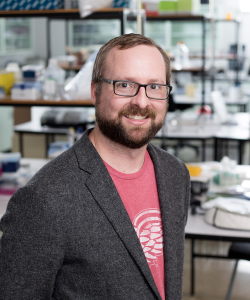
Mark Davis, Ph.D.
Director, Collaborative Conservation Genetics Lab
Growing up in the Loess Hills of northwest Iowa, Mark Davis was fascinated by the natural world, and the biodiversity inhabiting it. He spent his days outdoors, flipping rocks, wading streams, and wandering remnant prairies. The fish and wildlife of these places interested and inspired him then, and have shaped who he is as a scientist now: a Conservation Biologist and Director of the Collaborative Conservation Genetics Laboratory. Davis’ life’s work is committed to helping to conserve biodiversity for generations to come. While his research is taxonomically broad, the overarching goal is to elucidate patterns in biodiversity and processes that might be influencing biodiversity loss. The lab employs cutting-edge molecular tools from biodiversity monitoring using environmental DNA to transcriptomics, phylogenomics, and conservation genomics to inform management interventions for extending species’ evolutionary trajectories.
Davis’ research is inherently interdisciplinary, highly collaborative, and intensely applied. Moreover, he has strived to build a diverse, equitable, inclusive and just research program that supports each individual both professionally and personally. In doing so, he and his lab are tackling consequential challenges in biodiversity conservation to ensure these taxa that he grew up amazed by will be here for future generations.

Eric Larson, Ph.D.
Eric Larson is an associate professor in the University of Illinois Department of Natural Resources and Environmental Sciences, working broadly in freshwater ecology and conservation. He collaborates with the CCGL to detect both invasive non-native and imperiled native species using environmental DNA (eDNA), and to apply molecular methods to understand the causes and consequences of biological invasions.

Jinelle Sperry
Jinelle Sperry is an adjunct professor at the University of Illinois in the Natural Resources and Environmental Science department and a wildlife biologist for the US Army Engineer Research and Development Center (ERDC-CERL) in Champaign, IL. Her research focuses on community-level ecological interactions and animal behavior for endangered and at-risk species. Her research explores multiple facets of community ecology, including competition, mutualistic networks, and the ecological roles of invasive species. She also investigates animal behavior, communication, and movement across a wide range of taxonomic clades. Recent work has focused on the use of environmental DNA (eDNA) to explore species distributions, species interactions, and impacts of ecological correlates.
Postdoctoral Fellows

Nathan Alexander, Ph.D.
Nathan researches landscape genetics, gene flow, and species distribution modeling. His research primarily uses microsatellites and neutral markers to identify landscape features that pose barriers to connectivity, although he has also used mitogenomic data to identify intraspecific phylogenetic relationships. Nathan is also invested in increasing inclusion and access to wildlife ecology, especially for LGBTQ+ researchers and students.

Ellie Snyder, Ph.D.
Elise “Ellie” Snyder is an NSF postdoctoral researcher investigating how environmental RNA, or eRNA, could be used to monitor fish populations in streams. She conducts this work in collaboration with Mark Davis and Sarah Molinaro of the Stream Ecology Lab. Her postdoctoral research is supported by a National Science Foundation Postdoctoral Research Fellowship in Biology (Award ID 2410382). Ellie’s broader research interests include the ecology of eDNA and eRNA, as well as stream ecology and the movement of organic materials through streams and rivers. She earned her Ph.D. in biological sciences from the University of Notre Dame, specializing in stream ecology. Her doctoral research examined how environmental conditions, including temperature, biofilms, and substrate, influence the fate and transport of eDNA. Before attending graduate school, Ellie worked as a technician at the INHS. She earned her B.S. in integrative biology from the University of Illinois. Originally from Wisconsin, she moved to the nearby community of Paxton, Illinois, at age 7. Ellie’s published research can be found on Google Scholar.